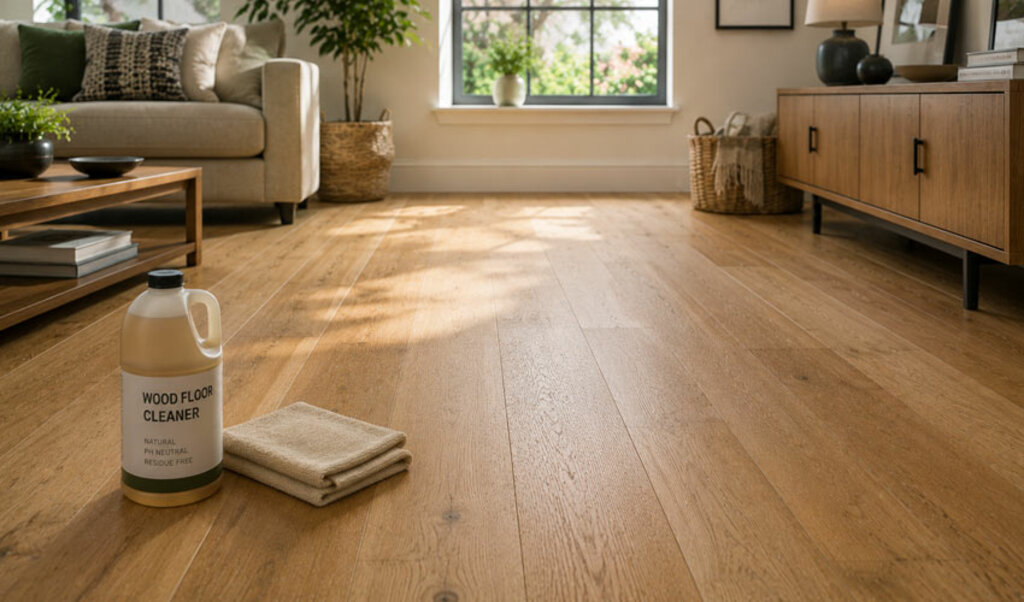
Engineered wood floors are a significant investment in any room or home. With appropriate care, they will remain in excellent condition for many decades. The care requirements are not onerous, but there are specific things that damage engineered wood floors and specific things that preserve them, and understanding the difference is important from the day the floor is installed.
The First Few Weeks
In the first week or two after installation, the engineered floor is still acclimatising fully to the room's temperature and humidity. Avoid washing the floor with water-based cleaners during this period. Dry sweep or dust mop as needed. If the floor was site-finished with a lacquer or oil, follow the finish manufacturer's specific guidance on when the floor can be washed; most require five to seven days before the first wet cleaning.
Do not place rugs on a newly lacquered floor for at least two weeks. Rugs placed on under-cured lacquer can cause the finish to soften and imprint the rug texture onto the floor surface permanently.
Cleaning an Engineered Wood Floor
For regular cleaning, use a microfibre flat mop, either dry for dust removal or lightly dampened with a diluted wood floor cleaner for more thorough cleaning. The mop should be damp, not wet. Excess moisture at board edges can penetrate into the engineered board's core over time, causing swelling and potentially causing the face veneer to lift.
The right cleaner depends on the finish. For Osmo-oiled floors, use Osmo Wash & Care. For Bona-lacquered floors, use Bona Wood Floor Cleaner. For floors with unknown finishes, a pH-neutral wood floor cleaner without oils, waxes or strong surfactants is the safest choice. Our full cleaners and polishers range is organised by finish type if you're unsure which category your floor falls into. Avoid vinegar, bleach, strong detergents and oil soaps.
Handling Spills
Wipe up liquid spills on an engineered wood floor immediately. The lacquer or oil finish provides water resistance at the surface, but standing water at board edges or in cracks and gaps will penetrate over time. Dry the area after wiping; do not leave it damp and move on.
For pet accidents, wipe immediately and clean with an appropriate pH-neutral cleaner. Urine is particularly damaging if allowed to stand: its chemical content can strip oil finishes and stain the wood beneath. Persistent pet accidents in the same area may eventually require professional cleaning or localised refinishing.
Protecting the Floor from Furniture and Traffic
Felt pads under all furniture feet are essential. Hard chair legs, sofa feet and table legs can cause concentrated scratching and denting on engineered wood surfaces. Replace felt pads regularly, as grit embedded in flat, worn pads causes damage similar to having no protection at all.
High heels, metal-tipped boots and football studs are particularly damaging to wood floors. These concentrate the wearer's weight over a very small surface area, easily exceeding the hardness of the wood and often the finish. While you cannot control what visitors wear, minimising these impacts where possible extends the life of the floor significantly.
Summary
- Use door mats at all external entries
- Sweep or dust mop regularly to prevent grit accumulation
- Clean with the appropriate product for the finish type
- Use a damp, not wet, mop for wet cleaning
- Wipe spills immediately
- Maintain felt pads under all furniture
- Maintain room humidity between 45 and 65 per cent
Humidity management is often overlooked in engineered floor care. While engineered wood is more stable than solid wood, very low humidity (below 35 per cent) in centrally heated homes during winter can still cause boards to gap and the face veneer to check. A reasonable humidity level in the room, maintained through normal occupancy habits and periodic ventilation, is more beneficial to the floor's long-term condition than most specific care products.
Common Questions About Caring for Engineered Wood Floors
How long after installation can I wash my new engineered floor?
Most site-finished floors need five to seven days before the first wet clean, though this depends on the specific finish used — check the manufacturer's guidance for your particular product.
Why shouldn't I use a wet mop on an engineered wood floor?
Excess moisture can penetrate at the board edges and get into the engineered core, causing swelling or lifting the face veneer over time. A damp, not wet, mop avoids this risk while still cleaning effectively.
Does the cleaning product really need to match the floor's finish?
Yes — an oiled floor needs a different cleaner to a lacquered one. Using the wrong type won't necessarily cause immediate damage, but repeated use can affect the finish over time.