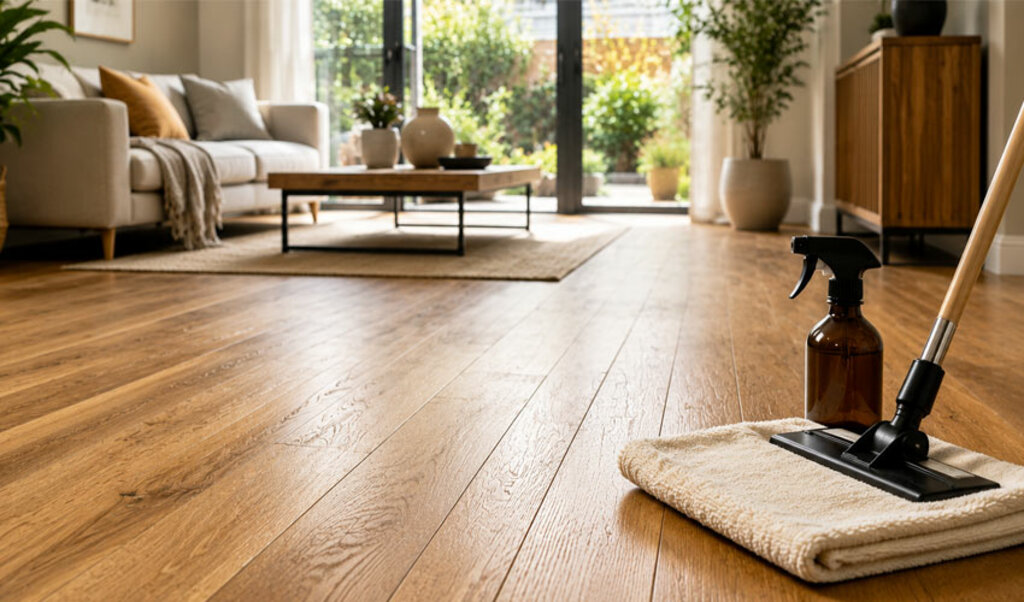
Knowing how to clean and maintain a wood floor properly will keep it looking its best for many years and avoid the need for expensive refinishing work. Wood floors are durable and long-lasting, but they do require some care — and using the wrong products or methods can cause more damage than neglect.
Routine Cleaning
The most important element of wood floor maintenance is regular, light cleaning. Fine grit and dirt particles tracked in from outside act as an abrasive underfoot, gradually scratching and dulling the surface finish. Sweeping or dry-mopping daily in high-traffic areas removes this grit before it can cause damage.
Use a soft-bristle broom or a dry microfibre mop for daily cleaning. Avoid stiff brushes, which can scratch the surface, and never use a vacuum with a beater bar or rotating brush head on a wood floor — the mechanical action can mark and scratch even a lacquered surface. If you use a vacuum, ensure it is set to the hard floor setting so only the suction function is active.
Choosing a Cleaner for Your Floor's Finish
This is where most cleaning mistakes actually happen — using a cleaner that isn't matched to the floor's finish. Lacquered floors need a pH-neutral cleaner, such as Bona Wood Floor Cleaner, which lifts dirt without leaving a residue or dulling the sheen. Oiled floors need something different — a low-pH cleaner like Bona Soap or Osmo Wash & Care, which cleans without stripping the oil out of the wood over time. Using a lacquer-formulated cleaner on an oiled floor (or vice versa) won't cause instant damage, but repeated use can dry the wood out or leave it looking patchy.
Apply the cleaner sparingly to a slightly damp microfibre mop — never pour liquid directly onto the floor and never use a soaking wet mop. Our full cleaners and polishers range is organised by finish type if you're not sure which your floor has.
When Cleaning Isn't Enough: Refreshing the Finish
Regular cleaning slows down wear, but it won't restore shine to a floor that's genuinely started to look dull or tired — that's a different job. A maintenance coating or refresher, such as Bona Freshen Up for lacquered floors or a wax oil refresher for oiled ones, adds a thin protective layer back onto a worn floor and restores some sheen — without the cost or disruption of a full sand and recoat. This is worth doing before a floor gets bad enough to need refinishing, not after.
What to Avoid
Several common cleaning practices that work well on other floor types can harm wood floors significantly. Understanding what not to do is as important as knowing the right approach:
- Never use steam mops — the heat and moisture penetrate the wood and can cause irreversible swelling, raised grain, and finish damage
- Avoid general-purpose floor cleaners, washing-up liquid, or bleach — these can dull the finish and leave residue that is difficult to remove
- Do not use wax polishes on lacquered floors — they create a slippery surface and interfere with future refinishing
- Avoid abrasive cleaning pads or scourers — even gentle scrubbing can scratch the surface finish
- Never allow standing water on a wood floor — wipe up spills immediately and dry the area thoroughly
Protecting the Floor
Prevention is far more effective than cure when it comes to wood floor maintenance. A few simple protective measures can dramatically extend the life of the surface finish and the floor beneath it.
Place entrance mats at external doors to capture grit and moisture before they reach the floor. Felt pads fitted to the legs of all furniture — chairs, sofas, tables, beds — prevent the scratches and dents that occur when furniture is moved or rocked. Replace felt pads regularly, as they accumulate grit and become abrasive over time.
High heels concentrate significant force onto a very small area. Stiletto heels in particular can leave dents even in hardened lacquered floors. While it is not practical to ban shoes in a home, keeping stilettos away from wood floors where possible will preserve the surface considerably.
If you have pets, keep their nails trimmed. Dog nails on a wood floor create a distinctive pattern of fine scratches that accumulate quickly and dull the finish. Placing a mat or rug under food and water bowls for pets prevents splashing and pooling around those areas.
Seasonal Care
Wood floors respond to changes in seasonal humidity. In centrally heated homes during winter, humidity levels can drop significantly, causing boards to shrink slightly and gaps to appear between them. In humid summer conditions, boards may expand and press together. These seasonal movements are normal and do not indicate a problem.
Maintaining a stable indoor humidity level — ideally between 40% and 60% relative humidity — minimises seasonal movement and reduces the stresses placed on the floor. A humidifier in winter and adequate ventilation in summer help to keep conditions stable. Avoid directing heating vents directly onto the floor surface, as this creates localised drying that can cause cupping or cracking.
Common Questions About Wood Floor Cleaning
How often should I clean my wood floor?
Daily sweeping or dry-mopping in high-traffic areas prevents the most damage, since grit is the main cause of surface wear. A proper wet clean with a finish-matched cleaner is generally needed less often — weekly to fortnightly for most homes.
Can I use the same cleaner on my whole house if I have different floor finishes in different rooms?
Not ideally — a cleaner matched to lacquered floors isn't the right choice for oiled ones, and using the wrong one repeatedly can affect the finish over time. It's worth keeping the right cleaner for each floor type rather than defaulting to one bottle for everything.
My floor looks dull even though I clean it regularly — what's wrong?
Regular cleaning removes dirt but doesn't restore a worn finish. A maintenance coating or refresher matched to your floor's finish type can restore shine without a full recoat — check whether your floor is lacquered or oiled first, since the right product differs between the two.