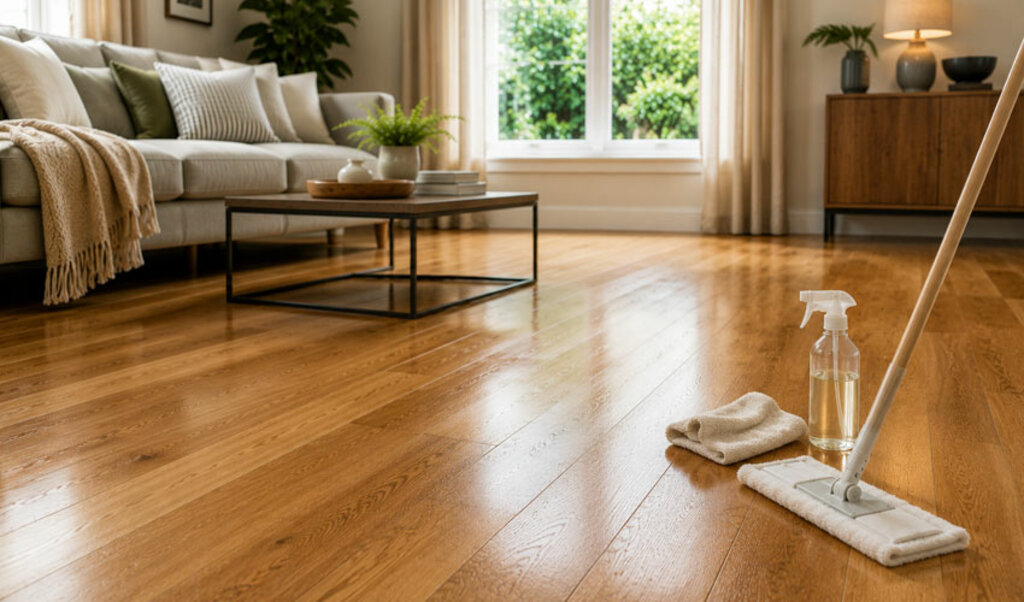
A wood floor that looks tired, dull or worn does not always need a full sanding and refinish to be transformed. In many cases, a properly prepared and applied refresh treatment can restore the appearance significantly at a fraction of the cost and disruption. Understanding when refreshing is appropriate and what the process involves allows for smarter decisions about floor maintenance.
Assessing Whether Refreshing Is Possible
A floor can be refreshed without sanding when the existing finish is still intact but has become dull, when no worn-through areas are exposing bare wood, and when no wax, polish or silicone residue on the surface would prevent a new coating from adhering. Running your hand across the floor in different lighting conditions tells you a lot: if the surface feels smooth and consistent but looks dull, a refresh coat is likely viable. If areas feel rough, sticky or clearly different in texture, more investigation is needed.
The water test is useful for oiled floors: sprinkle water and see whether it beads or absorbs. For lacquered floors, the question is whether the lacquer film appears continuous under good lighting or shows worn patches with a different appearance from the rest of the floor.
Refreshing an Oiled Floor
For an oil-finished floor in reasonable condition, clean thoroughly with an intensive cleaner like Osmo Intensive Cleaner, allow to dry completely, and apply a thin maintenance coat of the appropriate oil. Osmo Polyx-Oil, applied with a wool oiling pad for controlled coverage, revitalises a depleted oil finish rapidly, and the improvement in appearance is visible immediately as the oil is absorbed. Allow to dry for 12 to 24 hours before walking on the refreshed area.
For a quicker, lighter-touch option, Bona Wax Oil Refresher is a low-solvent, low-odour spray designed specifically for floors finished with hardwax oil or Bona Craft Oil. It requires no screening or intensive preparation — simply clean the floor, spray, and work it in with a cloth or applicator pad. It's a faster route than a full maintenance oil recoat, suited to floors that just need a light lift rather than a genuine oil top-up.
Refreshing a Lacquered Floor
For lacquered floors, a screen-and-recoat is the appropriate refresh process. The floor is lightly screened with 120-grit to 150-grit abrasive on a buffer machine to degloss the surface and create adhesion for the new coat. All dust is removed thoroughly. Then a fresh coat of compatible lacquer is applied using a T-bar applicator.
Bona Freshen Up is a single-component lacquer specifically formulated for recoating over existing lacquer surfaces. It applies easily and produces a consistent satin finish that restores the floor's appearance. One coat is usually sufficient as a refresh treatment.
When Refreshing Will Not Work
- Worn-through areas exposing bare wood: full sand and refinish needed
- Wax or silicone residue: prevents adhesion of refresh coat, needs stripping
- Peeling or flaking lacquer: adhesion failure, full refinish needed
- Stains or water damage in the wood: needs sanding out
- Significant scratching into the wood: cannot be refreshed, only sanded
A realistic refresh rather than a full refinish is a decision that saves money, saves disruption and extends the floor's life. The small investment of intensive cleaning and a refresh product, done at the right time before wear has advanced too far, is one of the most cost-effective maintenance actions available for any wood floor.
Common Questions About Refreshing a Wood Floor
How do I know if my floor needs a refresh or a full refinish?
Run your hand across the surface — if it feels smooth and even but looks dull, a refresh is likely viable. If any area feels rough, sticky, or shows bare wood or flaking lacquer, a full sand and refinish is needed instead.
Should I use a full maintenance oil or a quick refresher spray on my oiled floor?
A full maintenance oil recoat (like Osmo Polyx-Oil) gives more thorough restoration and is worth doing periodically. A refresher spray is faster and requires less preparation, making it suited to a lighter, more frequent touch-up between full recoats.
How long should I wait after a floor is refreshed before walking on it?
For an oiled refresh, allow 12 to 24 hours before normal foot traffic. For a lacquer recoat, check the specific product's drying time before resuming full use of the room.