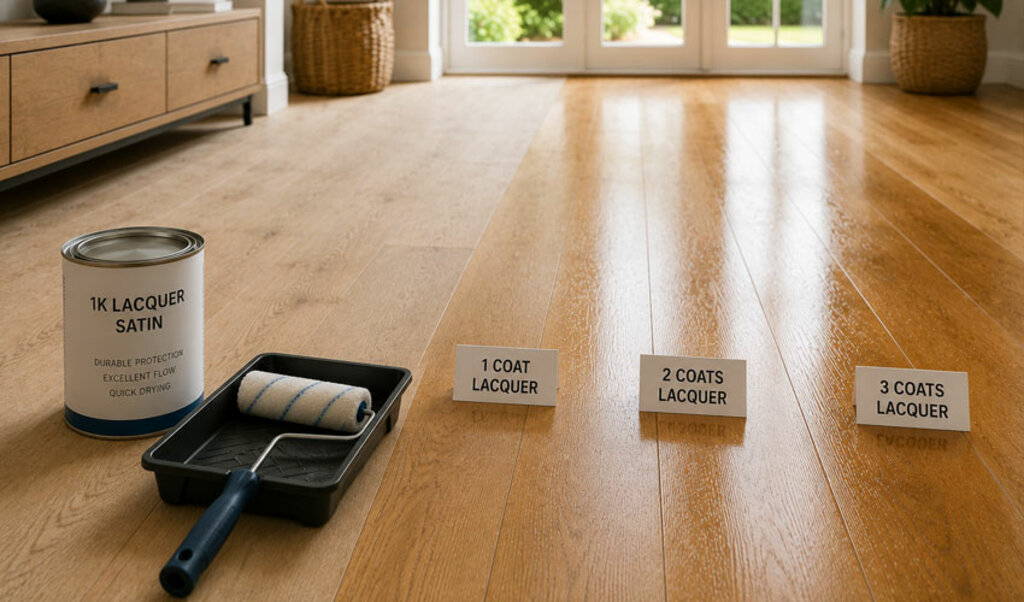
Determining how many coats of lacquer a wood floor needs is essential for achieving a durable, professional finish that will withstand daily wear and tear. The answer depends on several factors, including the specific product used, the wood species, and your intended use. Most flooring professionals recommend between two and four coats of lacquer for residential applications, with commercial or high-traffic spaces sometimes needing additional layers.
Why Multiple Coats Matter
A single coat of lacquer cannot provide adequate protection for wood floors. One application dries too thin to offer genuine durability, leaving the wood vulnerable to scratches, moisture damage, and UV fading. Multiple coats build upon each other, creating a robust protective barrier that seals the wood grain effectively. Each successive layer also enhances the visual depth and clarity of the finish, resulting in a more professional appearance.
Coat Numbers by Use Case, Not Just Brand
Rather than a fixed number tied to a specific manufacturer, the right coat count depends more on the product tier and the room's traffic level:
Two Coats: Low-Traffic Areas Only
A two-coat system is generally the minimum, and it's really only appropriate for genuinely low-traffic spaces — bedrooms, studies, or guest rooms where the floor sees light, infrequent use. It provides only basic protection, and pushing it further into a busier room limits how long the floor will look good before needing attention.
Three Coats: The Standard for Most Homes
Three coats are the typical recommendation for most residential floors. This provides solid durability for moderate to high-traffic areas, including living rooms, hallways, and kitchens. A one-component product like Bona Mega or Junckers MT500 is well suited to a three-coat system, delivering a finish that resists daily wear effectively. Three coats also create enough depth to obscure minor dust particles trapped during application, giving a cleaner final appearance than a thinner build-up would.
Four Coats: High-Traffic and Commercial Spaces
Four coats represent the more demanding approach, suited to high-traffic commercial spaces or households with pets and young children. A two-component product — Bona Traffic HD, Junckers HT700 or Morrells Induro XL2 — is generally the better base for a four-coat build, since these are formulated for the extra durability that a heavier build is meant to deliver. Building four coats from a lighter, one-component product doesn't achieve the same result as choosing a genuinely commercial-grade lacquer to begin with.
Key Factors Affecting Coat Numbers
Several variables influence how many coats your specific wood floor requires:
- Wood Type: Dense hardwoods like oak and maple may need fewer coats than softer woods such as pine, which absorb finish more readily
- Traffic Level: High-traffic commercial properties require more coats than residential bedrooms
- Existing Finish: Refinishing over old lacquer may require different coat numbers than new installations on bare wood
- Lacquer Type: A two-component product typically builds a tougher film per coat than a one-component product
- Application Method: Spray application (more common commercially) typically achieves more even coverage than brush or roller methods
- Environmental Conditions: Temperature and humidity during application affect coat thickness and curing
- Manufacturer Specifications: Always follow the specific technical data sheet for the exact product you're using — this guide gives general ranges, not a substitute for the manufacturer's instructions
Application Process and Drying Times
Preparation Between Coats
Proper preparation between lacquer applications is crucial for adhesion and final quality. Lightly screen the dried surface with a fine abrasive (roughly 100-150 grit — our abrasives range covers this) to promote mechanical bonding for the next coat. Vacuum thoroughly to remove all dust particles, as these will create visible defects in the finish. Allow adequate drying time between coats — typically one to two hours for a fast one-component water-based lacquer in good conditions, longer for solvent-based products, and this varies with temperature and humidity.
Curing After the Final Coat
The final coat needs an extended curing time before the floor can withstand normal use. Bona Traffic HD is positioned by Bona as their fastest-curing option, with normal traffic possible again within around 12 hours in good conditions, though full hardness continues to develop over several days. Standard one-component lacquers typically need a few days of light use before furniture and rugs go back down. Avoid moisture exposure and heavy furniture placement during this period to avoid damaging the still-curing finish.
Recommendations by Room
Different rooms genuinely call for different approaches:
- New floor installation: 3 coats for residential use is a reasonable default; 4 coats for anything heading into commercial or very high-traffic use
- Floor refinishing over existing, sound finish: often 2-3 coats is sufficient; if stripping fully to bare wood, treat it as a new installation
- Kitchens and bathrooms: at least 3 coats given moisture exposure, with 4 worth considering in areas with frequent water contact
- Hallways and entryways: 4 coats is a sensible target for these consistently high-traffic zones
- Bedrooms and lounges: 2-3 coats is generally sufficient for genuinely low-traffic residential spaces
- Commercial spaces: 4+ coats is standard, using a two-component commercial-grade product rather than a domestic one-component lacquer
Choosing the Right Lacquer Product
Water-Based Lacquers
Water-based lacquers from manufacturers like Bona, Loba and Junckers offer lower VOC emissions and generally faster drying times between coats. These products produce minimal odour, making them suitable for occupied properties. Modern two-component water-based formulations, such as Bona Traffic HD or Loba 2K Supra A.T., now match or exceed the durability once associated only with older solvent-based products.
Solvent-Based Lacquers
Solvent-based lacquers can offer strong hardness characteristics and sometimes achieve adequate protection in fewer coats, but they come with longer drying times and stronger odours requiring good ventilation during application. Given the shift in the market toward water-based systems, check whether a specific solvent-based product is still needed for your project, or whether a modern water-based two-component product would achieve the same result with an easier application process.
Common Mistakes to Avoid
Applying too few coats to save time or money is a false economy — inadequate lacquering leads to premature wear and earlier refinishing, creating higher long-term costs. Conversely, exceeding a product's recommended coat count can cause finish instability or excessive thickness. Rushing between coats before proper drying compromises adhesion and durability. Skipping screening between coats reduces bonding effectiveness, while inadequate ventilation traps moisture and slows curing.
Final Recommendations
For most residential wood floors, three coats of a quality one-component lacquer provide a solid balance between durability and efficiency. High-traffic areas and commercial properties are better served by four coats of a proper two-component system, chosen specifically for that heavier build. Always check the specific technical data sheet for whichever product you're using — coat counts and drying times genuinely vary between products, even within the same brand. Invest in proper preparation and patience between coats; shortcuts compromise the whole project's result.
Common Questions About Lacquer Coats
Is more coats always better?
No — exceeding a product's recommended coat count can actually cause finish instability or excessive thickness. The right number depends on the specific product and the room's traffic level, not simply applying as many as possible.
Can I apply fewer coats if I use a two-component lacquer?
A two-component product builds a tougher film per coat, but it's still generally recommended to follow the manufacturer's specific coat count rather than assuming fewer coats will match the performance of the recommended number.
Do I need to sand between every coat?
Yes — a light screening between coats removes minor imperfections and dust, and gives the next coat something to properly bond to. Skipping this step reduces adhesion and can lead to a weaker overall finish.